
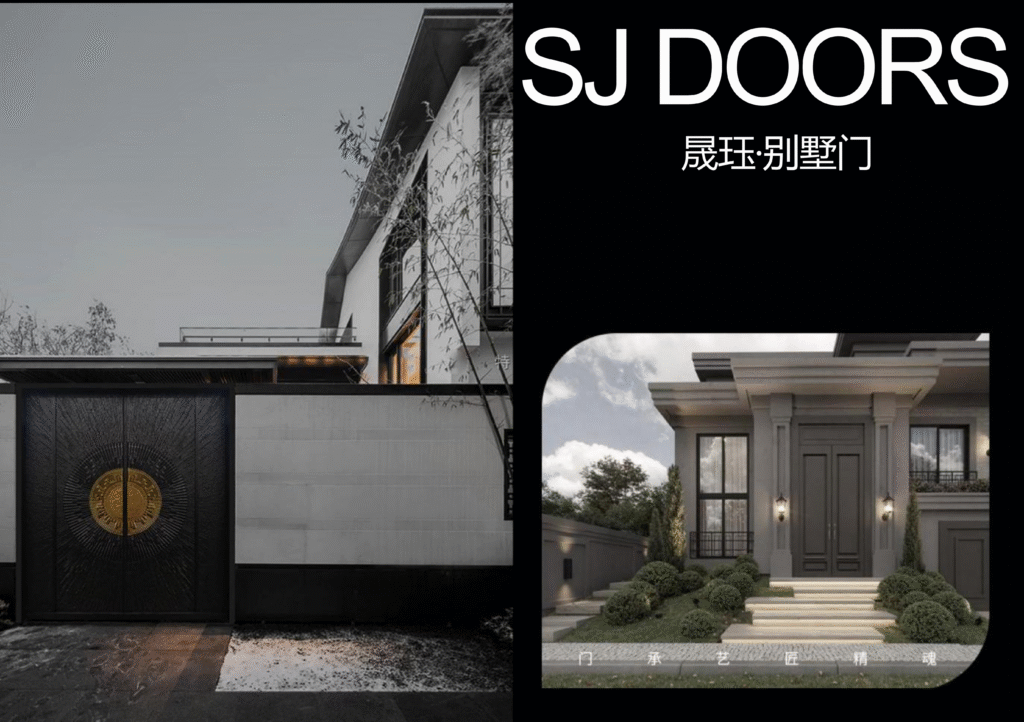
Custom Entry Doors for North America: Why OEM Production in China Works
North American importers, distributors, builders, and architectural millwork companies need dependable entry-door suppliers who can meet exact drawings, maintain consistent quality, and ship on schedule. Since 2011, SJ DOORS has manufactured custom aluminum, stainless steel, cast aluminum, and pivot entry doors in Foshan, China for B2B partners across the United States and Canada.
An OEM partnership is more than buying a standard door and adding a logo. It combines product engineering, sample approval, material selection, hardware sourcing, factory production, inspection, export packing, and repeatable quality control. The right factory becomes an extension of your brand and helps you quote projects with confidence.
What North American Buyers Need From a Door Manufacturer
Projects in the United States and Canada vary widely. A distributor may need a repeatable residential door model, while a commercial contractor may require project-specific dimensions, wind-load performance, hardware preparation, or fire-rated assemblies. A reliable OEM partner should support:
- Manufacturing from architectural drawings, shop drawings, schedules, or reference samples.
- Imperial and metric dimensions, with clear conversion checks before production.
- Left-hand, right-hand, inward, and outward opening configurations.
- Custom frame depths, masonry returns, anchors, and installation details.
- Commercial-grade locks, closers, panic hardware, hinges, and access-control preparation.
- Powder coating, anodizing, wood-grain finishes, stainless finishes, and custom color matching.
- Export packing that protects finished surfaces during container shipping and local handling.
- Consistent replacement parts and repeat production for multi-phase projects.
Entry Door Types Available for OEM Programs
SJ DOORS manufactures several door families so distributors can serve residential, hospitality, multifamily, and commercial markets without working with multiple factories.
| Door Type | Best Applications | Key Advantage |
|---|---|---|
| Thermal-break aluminum | Residential, multifamily, coastal projects | Corrosion resistance, modern profiles, low maintenance |
| Stainless steel | Commercial, hospitality, high-security entrances | Strength, impact resistance, premium appearance |
| Cast aluminum | Luxury villas, hotels, decorative entrances | Detailed panels, wood-grain finishes, durable surface |
| Pivot doors | Luxury homes, lobbies, feature entrances | Large slabs and uninterrupted architectural lines |
| Custom steel doors | Industrial, institutional, security-focused projects | High rigidity and flexible reinforcement options |
Each door can be configured with vision lites, sidelights, transoms, insulated glass, laminated glass, decorative glass, stainless pulls, concealed hinges, multipoint locks, and project-specific finishes. Hardware can be supplied by the factory or prepared for hardware scheduled by the customer.
How the OEM Manufacturing Process Works
1. Define the Product and Market
We start with the intended market, price point, opening size, quantity, finish, and performance requirements. This step prevents costly changes later. A distributor selling replacement doors has different requirements from a developer purchasing doors for a new multifamily building.
2. Review Drawings and Specifications
Send elevation drawings, section details, door schedules, hardware schedules, finish samples, and photographs of similar products. Our team checks dimensions, handing, frame construction, glass, reinforcement, and installation conditions. Any unclear detail is resolved before quoting.
3. Prepare the Proposal and Sample
The quotation identifies materials, finishes, hardware, packing, MOQ, production time, Incoterms, and payment terms. For new programs, a sample or sample corner may be produced to confirm color, texture, joinery, and hardware preparation.
4. Approve Shop Drawings
Production does not begin until drawings and the sample are approved. Shop drawings show the final opening dimensions, handing, glass, hardware locations, finish codes, and labeling. This approval protects both the buyer and the factory.
5. Manufacture and Inspect
Frames, slabs, reinforcement, and hardware preparation are produced to the approved drawings. Inspections cover dimensions, squareness, finish, glass, locks, operation, sealing, and packing. Products are labeled by unit so they can be matched to the project schedule after arrival.
6. Pack and Ship
Doors are protected with foam, film, corner guards, moisture protection, and export-grade cartons or crates. We support FOB, CIF, and door-to-door quotations through reliable freight partners serving US and Canadian ports, rail terminals, and project warehouses.
Quality Control Before Shipment
- Material and profile verification before fabrication.
- Dimensional inspection against approved shop drawings.
- Frame and slab fit, squareness, and handing verification.
- Hardware installation and operating checks.
- Finish inspection under appropriate lighting, including color and texture review.
- Glass, sealant, gasket, and drainage checks.
- Final packing inspection with unit labels and loading photographs.
Common Mistakes to Avoid
Many import problems begin with unclear dimensions or unapproved substitutions. Do not rely on a rough opening alone if the finished opening can be measured. Confirm whether hardware is included, who supplies cylinders, whether glass must be tempered or laminated, and how the door will be anchored. Also confirm finish direction and color under both indoor and outdoor lighting. A written approval process prevents assumptions from becoming production errors.
MOQ, Lead Time, and Shipping
Standard models can start with small trial orders, while fully custom OEM programs usually require a production batch that supports tooling, finish setup, and packaging. Sample lead time is generally 3-7 working days after approval. Production schedules depend on quantity, finish, hardware, glass, and factory capacity. Sea freight is the most economical option for full containers; air freight can be used for samples or urgent units.
How Pricing Is Calculated
Door pricing is based on dimensions, material, finish, glass, hardware, reinforcement, quantity, packing, and delivery terms. A larger slab, thicker frame, special finish, or complex hardware increases cost. Consolidating several models into one production order can reduce setup expense and freight cost. Buyers should compare landed cost rather than factory price alone, including freight, insurance, duties, port charges, trucking, and warehouse handling.
Frequently Asked Questions
Can you manufacture from US or Canadian door schedules?
Yes. We can review schedules, elevations, hardware sets, and architectural details. Dimensions are converted carefully, and shop drawings are issued for approval before production.
Can doors be branded for our company?
Yes. We support private-label labels, packaging, manuals, hardware marking, and model naming. Branding can be applied without changing the structural design approved for the project.
Do you provide samples?
Yes. Samples may be complete doors or representative sections, depending on the product and customization level. Sample cost and freight are confirmed before production.
Start Your North American OEM Door Program
Send your drawings, door schedule, target quantity, finish requirements, and destination port. Our team will review the project, recommend the right material, and prepare a factory-direct quotation. You can also review our entry door product range, learn why importers work directly with a Chinese factory, or contact SJ DOORS to begin an OEM sample and production plan.