
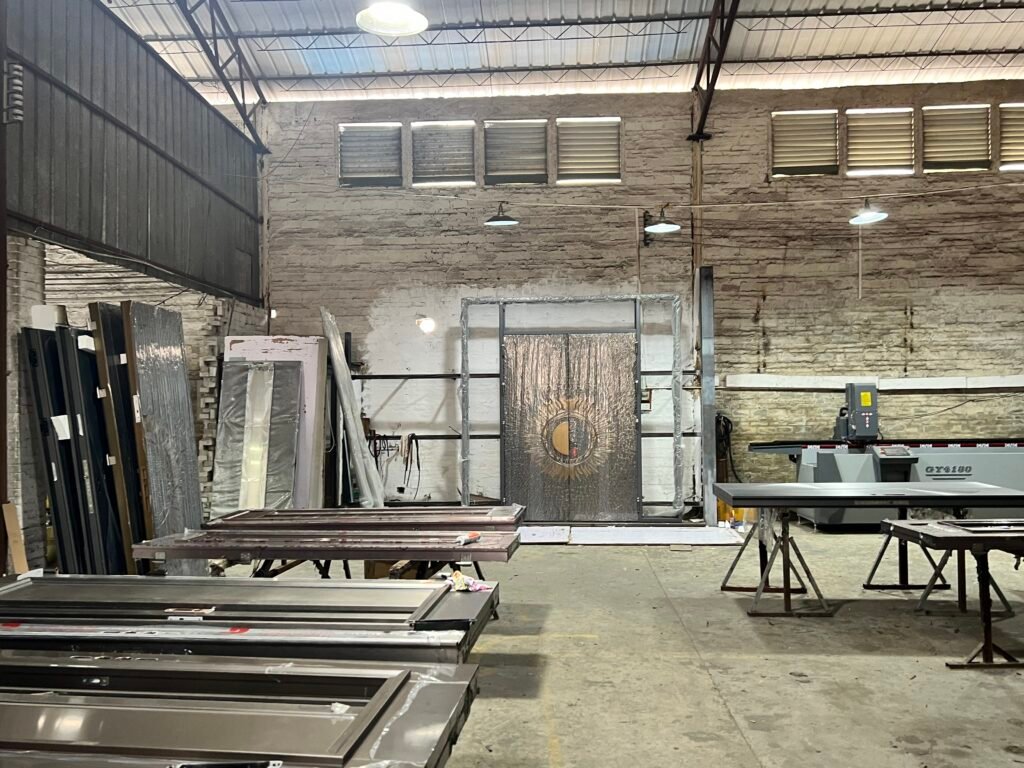
B2B Door Sourcing: Why Importers Choose Direct Factory Partnerships in China
Direct factory sourcing is one of the most effective ways for door distributors, wholesalers, contractors, and private-label brands to improve margin and control product quality. A factory partnership removes unnecessary trading layers, makes customization possible, and gives the buyer access to production information that is often unavailable through an intermediary.
It also creates new responsibilities. The buyer must qualify the supplier, approve samples, control specifications, verify quality, and understand export terms. A structured sourcing process turns a low-price purchase into a repeatable supply program.
What Direct Factory Sourcing Means
A manufacturer controls production equipment, materials, workforce, engineering, quality control, and export packing. A trading company may source multiple factories but often does not control those processes. Working directly with a factory can reduce cost and shorten communication, but the buyer must confirm that the company really owns or manages the production process.
For doors, direct sourcing is especially valuable because finished products are large, project-specific, and difficult to replace after shipment. Dimensions, handing, hardware, finish, glass, reinforcement, and packing all need to be controlled before production.
Benefits of a Factory Partnership
| Area | Direct Factory Partnership | Typical Trading Layer |
|---|---|---|
| Pricing | Factory cost plus agreed margin structure | Additional intermediary margin |
| Customization | Engineering and OEM changes handled at source | Specification may be relayed through another company |
| Quality control | Direct access to inspections, drawings, and production records | Quality information may be filtered |
| Lead time | Production schedule controlled by the manufacturer | Extra communication and coordination steps |
| Repeat orders | Approved specification can be reproduced consistently | Factory or materials may change between orders |
| Problem solving | Production and packing changes handled directly | Issue resolution depends on the intermediary |
How to Qualify a Chinese Door Factory
1. Confirm the Product Scope
Ask which door types the factory actually manufactures: aluminum, steel, stainless steel, cast aluminum, pivot, or other custom systems. Request examples of previous projects with similar dimensions, finishes, and hardware requirements.
2. Verify Production Capability
Review factory size, equipment, welding and finishing processes, assembly lines, and inspection areas. Video tours and recent production photos help, but they should be supported by samples and consistent order records.
3. Review Quality Control
Ask for the inspection process, dimensional tolerances, finish standards, hardware tests, packing method, and how nonconforming products are handled. A factory that documents quality before shipment is easier to manage than one that only promises “high quality.”
4. Check Export Experience
Confirm experience with the destination market, Incoterms, container loading, labeling, documentation, and freight coordination. Door dimensions and weight make loading and protection part of product quality.
Commercial Terms to Agree Before Ordering
- MOQ: Standard models, sample orders, customization, and mixed-model containers may have different minimum quantities.
- Pricing basis: Clarify EXW, FOB, CIF, or door-to-door terms and what is included.
- Payment schedule: Deposit, balance, inspection, and shipment milestones should be written clearly.
- Lead time: Count time after drawing and sample approval, not from the initial inquiry.
- Tolerance: State permitted dimensional variation, finish variation, and hardware substitution rules.
- Warranty: Define the covered product, period, claim evidence, and replacement process.
- Packing: Specify protection level, label format, and whether accessories ship with each door.
OEM and Private-Label Door Programs
Direct factories can support private-label brands with custom model names, logo labels, packaging, manuals, and branded hardware. The factory can also adjust dimensions, colors, glass, handles, locks, and reinforcement to meet the target market.
The approved sample becomes the reference for future production. Record the drawing number, finish code, hardware schedule, packing method, and sample photos. This reduces disputes when a repeat order is placed months later.
Quality Control for Door Imports
Pre-Production
Confirm materials, profiles, hardware, glass, finish, and shop drawings before fabrication. Any substitution should be approved in writing.
During Production
Review welding, reinforcement, frame assembly, hardware preparation, and finish progress. For large orders, a third-party inspection can verify quantity and specification.
Before Shipment
Check dimensions, squareness, handing, opening operation, locking, glass, finish, label matching, and packing. Record container loading photos and list the cartons or units in each container.
Logistics and Container Planning
Door shipments require careful planning because units are bulky and easily damaged. Confirm carton dimensions, stackability, pallet requirements, and whether frames and hardware are packed together. Mixed-model shipments should be labeled by project, model, building, floor, or door number.
Compare FOB, CIF, and door-to-door quotations, but also calculate duties, port charges, unloading, inland trucking, and storage. The lowest freight quote may not be the lowest total landed cost if it increases handling risk.
Common Risks in Direct Sourcing
- Choosing a supplier based only on the lowest quotation.
- Starting production without an approved sample or shop drawing.
- Using unclear dimensions or converting units without checking.
- Allowing unapproved hardware or material substitutions.
- Ignoring packing protection and container loading.
- Failing to record the approved specification for repeat orders.
- Comparing factory price without calculating landed cost.
How to Start a Factory Partnership
Begin with a small trial order or sample that represents the product you intend to sell. Test the door with local installers and customers, collect feedback on dimensions, finish, weight, hardware, and instructions, and then refine the product before scaling.
Once the specification is stable, agree on an annual or seasonal forecast. A clear forecast can improve material planning, production scheduling, and pricing consistency. It also helps the factory reserve capacity for your orders.
Frequently Asked Questions
Is a Chinese factory always cheaper than a trading company?
Not always. A factory may offer better control and competitive pricing, but a trading company can be useful for small mixed orders or sourcing multiple product categories. Compare total value, not price alone.
Can we visit the factory?
Yes. Factory visits can confirm equipment, production organization, quality control, and export packing. If travel is not possible, request a live video tour and recent production records.
How do we protect our private design?
Use a clear written agreement, control drawings and tooling records, limit access to sensitive files, and confirm ownership of custom designs before production.
Build a Long-Term Door Supply Program
A direct factory partnership works best when specifications, quality controls, and communication routines are established early. Send us your target products, quantities, destination market, and customization requirements. Review our door product range, learn how to select an OEM partner, see our manufacturing facility, or contact SJ DOORS to start a factory-direct program.